Why oak?
Oak has framed English buildings for the best part of a thousand years. It is strong, repairable and good-looking, and it improves with age.
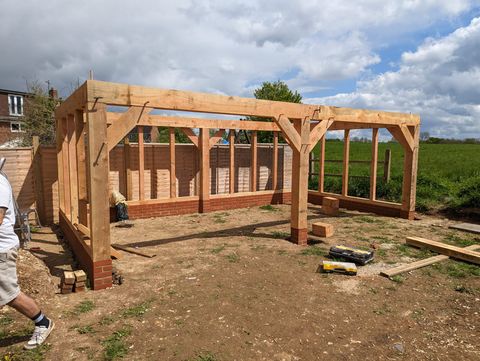
A structural timber, proven for centuries.
Oak is one of the densest and strongest of the native hardwoods. Cut green, it works cleanly under the chisel; as it seasons in the frame it hardens further, and the joints, pegged mortise and tenon cut to fit one another, lock tighter as the timber settles.
This is not a modern experiment. Medieval oak frames are still standing, still doing their job, in villages across the south of England.
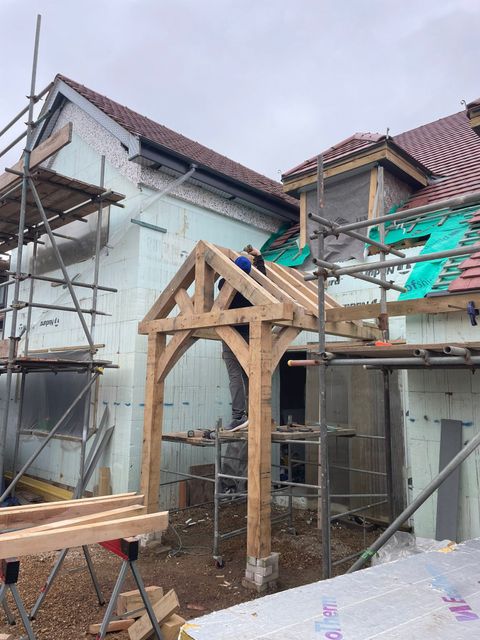
A living material, not a manufactured one.
No two oak beams are alike. The grain, the knots and the medullary rays give every frame its own character, and the material keeps changing after it's raised: fresh-cut oak is warm and golden, and left untreated it weathers slowly to a soft silver-grey.
As green oak dries it develops surface splits (known as checking) and fine shakes along the grain. They are natural, expected, and structurally harmless: part of what gives an oak frame its handmade look.
More on how oak weathers, and the little it asks of you, on the aftercare page.
Built once, built properly.
An oak frame is a long-term decision. The material is natural and endlessly recyclable, the structure is repairable joint by joint, and a well-built frame will comfortably outlast the people who raised it. Measured against a lifetime, oak is rarely the expensive choice.
And if oak isn't the right answer for your project, we'll tell you.
Tell us about your project.
Call us, or send an enquiry and we'll usually reply the same working day.