Letting oak be oak.
A green oak frame asks very little of you. Most of what it does in its first few years isn't damage. It's the timber settling into a long life outdoors.
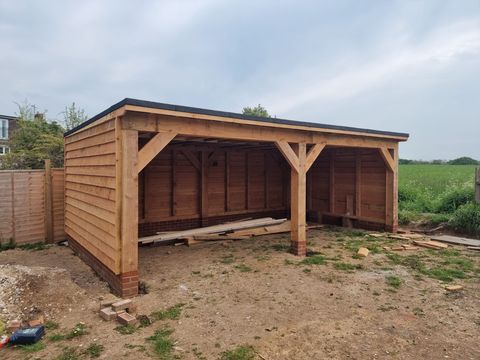
Your frame will move, check and mellow.
Oak is raised green and does its seasoning in place. As it dries you'll see surface splits open along the beams (called checking), along with fine cracks at the ends and the odd bead of moisture. All of it is normal, and none of it weakens the frame: the joints are designed for exactly this movement.
The colour changes too. Fresh oak is golden; over a few years, left untreated, it weathers to the soft silver-grey you see on old barns. In the early months rain can also draw dark tannin streaks out of the timber. They wash away naturally and fade as the frame settles.
The short list.
Mostly, do nothing
Structural oak needs no treatment to survive outdoors. Letting it silver naturally is the traditional choice, and the lowest-maintenance one.
Keeping the golden colour
If you'd rather hold the fresh-cut tone, a UV-protective oak oil will slow the silvering, but it needs reapplying every year or two. Avoid film-forming varnishes and paints: they trap moisture and peel.
Cleaning
A soft brush and clean water deal with most marks and surface growth. Skip the pressure washer. It drives water into the grain and furs the surface.
Around the frame
Keep soil, planters and climbing plants off the oak so it can dry between rains, and use stainless or galvanised fixings for anything you attach: oak's natural tannins corrode bare mild steel.
If something doesn't look right, ask us.
Most of what worries new oak-frame owners is the material doing exactly what it should. But if a split looks deeper than surface checking, or a joint seems to have moved more than it ought to, get in touch with a photo. We'd far rather take a look than leave you wondering.
Tell us about your project.
Call us, or send an enquiry and we'll usually reply the same working day.